Let me start with a question I get at least three times a week from electrical cabinet manufacturers who already run our production lines: Can our standard electrical cabinet profile production line actually make flame-retardant profiles? For years, I dodged this question with the standard industry line: “We can integrate the right additives if you need.” But last quarter, we installed three modified lines for a major industrial control panel maker in the Midwest, and that experience changed everything. Today, I’m talking about what actually works, what doesn’t, and why the answer isn’t just “yes”—it’s how to make it work without crippling your line’s efficiency or your bottom line. Electrical Cabinet Profile Production Line

First, let’s get one thing straight: flame-retardant profiles for electrical cabinets aren’t a luxury anymore. If you’re building enclosures that hold circuit breakers, PLCs, or power distribution units, your local electrical code almost certainly requires a UL 94 V-0 or V-1 rating for non-metallic components under 6mm thick. The big mistake most buyers make is assuming that because their production line runs aluminum or steel cabinet profiles, it can handle plastic (usually PVC, ABS, or a PVC-ABS blend) flame-retardant runs without tweaks. Our standard line is built for high-volume, consistent extrusion—for 90% of clients, that works for regular profiles, but flame-retardant materials play by different rules.
Let’s break down why our production lines can, in fact, produce flame-retardant profiles—but only if you account for four critical points that most suppliers gloss over. The first is additive dispersion. Traditional flame retardants, like aluminum trihydrate (ATH) or magnesium hydroxide (Mg(OH)2), are bulky, powdery, and they don’t mix evenly with polymer pellets if your line’s mixing stage is underpowered. Last year, a client in Texas tried running flame-retardant PVC on our unmodified line, and they got a batch of profiles where one corner was V-0 and the other was barely V-2. The problem? Their batch feeder only ran for 10 seconds at a time, so the heavy ATH settled at the bottom of the hopper, and the extruder’s single screw couldn’t shear the material enough to redistribute it. We fixed that by adding a variable-speed batch feeder and a twin-screw extruder adapter to their line—something we’ve standardized now for all clients looking to run flame-retardant materials. That tweak only adds 7% to the line’s setup cost, but it cuts bad batch rates from 12% to less than 0.5%.
Second, you have to adjust the cooling and calibration stages of your production line. Flame-retardant polymers have higher shrinkage rates than regular grades—something you might not notice when running 10-foot test profiles, but becomes a huge problem when you’re running 200-foot production runs. Let’s go back to that Midwest client I mentioned earlier: they were producing 3mm thick PVC-ABS flame-retardant profiles for their NEMA 4X enclosures. Their original calibration table was set for standard PVC, so they were pulling the profile through at a constant speed, and by the end of a 12-hour run, the profiles were 0.2mm narrower than required. That meant they had to trim 2 inches off every profile, wasting material and adding 12 minutes of downtime per shift for adjustments. We installed a tension-controlled calibration table, which uses pressure sensors to adjust the pull speed dynamically based on the profile’s cross-section. Now, their shrinkage is consistent across every run, trim waste is down 18%, and they haven’t had a single rejection due to dimensional inconsistency in 6 months. That’s not a tiny win—for a line producing 10,000 profiles a month, that’s $45,000 a year in saved material and labor.
The third point is often the most overlooked: die design and material compatibility. A lot of standard production line dies are made for smooth, unfilled polymers. Flame-retardant materials, especially those with high ATH content, are more abrasive. Over time, that wears down the die’s internal channels, leading to uneven flow and inconsistent profile walls. Early on, when we’d supply standard dies to flame-retardant clients, we’d see die life drop from 18 months to 5 months—costing them thousands in replacements and downtime. Now, we offer die inserts made from chrome-plated steel or tool steel for clients running flame-retardant materials. These inserts are affordable (they add about 5% to the total die cost) and extend die life to 16 months, which means almost no unplanned downtime from die wear. We also adjust the die’s internal flow channels to reduce shear on the abrasive flame-retardant material—lower shear means less heat buildup, which is critical because overheating can break down flame-retardant additives and destroy their rating.
Wait, let’s address the elephant in the room: what about line speed? A lot of engineers I talk to worry that adding all these tweaks will slow down their production line so much that the flame-retardant run isn’t worth it. That’s a fair concern, but here’s the data: our standard line runs at 12 meters per minute for regular PVC profiles. For flame-retardant PVC, with the tweaks I mentioned, we average 10.5 meters per minute. That’s a 12.5% speed drop, but when you factor in the reduced waste, fewer rejections, and lower maintenance costs, the overall production cost per profile drops by 8%. For a client producing 10,000 profiles a month, that’s about $0.12 saved per profile—add that up, and it’s $14,400 a year. Plus, most of our clients run flame-retardant profiles on a dedicated shift, not every shift, so the speed drop barely impacts their overall monthly output.
But here’s the thing: our production line can produce flame-retardant profiles, but it’s not a one-size-fits-all solution. We don’t claim that our standard line, straight out of the box, will turn out UL 94 V-0 profiles on the first run. That’s a common misconception—many competitors will tell you that, and then when your line fails, they blame your material or your operators. We’re different because we’ve spent 5 years testing this. We’ve run over 200 test runs with 12 different flame-retardant polymer blends (PVC, ABS, PVC-ABS, polycarbonate, even some engineering plastics) on our lines, and we’ve standardized the tweaks that work for 95% of electrical cabinet profile applications. For the other 5%—like very thick profiles (over 10mm) or profiles made with specialty flame-retardant additives—we work with our clients to design a custom modification, usually adding a specialized mixing unit or a dedicated cooling zone, and those modifications take less than a week to install.
Let me use a real example from a client in Ohio, a mid-sized electrical enclosure maker. Six months ago, they came to us saying their old line, from a different supplier, couldn’t run flame-retardant profiles without constant rejections. Their rework rate was 22%, and they had a 3-month backlog because they couldn’t get compliant profiles on time. We installed our modified line, trained their operators on the new settings, and ran three test batches. The first batch had a 98% pass rate for flame rating, the second was 99.2%, and now, six months later, their rework rate is down to 1.8%. They told us last month that this modification alone let them take on three new clients, adding $2.1 million in annual revenue. That’s the kind of result that makes all the testing worth it.
Now, I want to talk about what doesn’t work. A lot of clients try to cut corners here. They’ll buy our standard line, add a cheap batch feeder from a third-party, and skip the die inserts. Last year, a client in Chicago did that, and within two weeks, they had to shut down the line because the die was worn so badly that profiles had holes in them. They spent $12,000 on emergency die repairs and 3 days of downtime—costing them over $50,000 in lost production. The lesson here is: flame-retardant profiles aren’t a minor add-on to your production line. They require small, targeted tweaks, not band-aids.
Another common mistake is not testing the line with the exact material you plan to run. We always recommend that clients send us a 5lb sample of their flame-retardant polymer before we install any modifications. That way, we can test the blend’s viscosity, additive content, and abrasive properties, and adjust the line accordingly. Last quarter, a client from Florida sent us a PVC blend with a 60% ATH content—much higher than the 40% average we work with. We added a second shear zone to the twin-screw extruder, and now their line runs at 11 meters per minute with zero dimensional issues and a 99.5% flame rating pass rate. If we hadn’t tested the material first, their line would have failed, and we’d have lost a client.
Let’s also address regulatory requirements, because that’s what this all comes down to. When you’re making electrical cabinet profiles, you don’t just need a flame rating—you need documentation that proves every batch meets UL 94, IEC 60332-1, or whatever standard applies to your market. Our production line is equipped with a batch tracking system that logs every key parameter: temperature, pressure, mixing time, pull speed, and additive content. That means when you run a flame-retardant profile, you have a full audit trail that you can submit to UL or any code body. No more scrambling for paperwork, no more delays in getting your products certified. That’s a huge benefit that most suppliers don’t mention.
Now, let’s get to the practical side of working with us. We don’t sell “flame-retardant production lines” as a separate product. We sell standard electrical cabinet profile production lines, and we offer a modular upgrade package that lets you switch between standard and flame-retardant runs whenever you need to. That means if you have one line making standard profiles and another making flame-retardant profiles, you can reconfigure them if demand changes. The upgrade package takes about two days to install, and our team will come to your facility to train your operators on how to adjust settings, monitor runs, and troubleshoot small issues. We also provide 24/7 support for our clients, so if you have a problem in the middle of a night shift, you can call us and we’ll walk you through the fix.
Wait, I know some of you are thinking: this all sounds great, but what if I only need flame-retardant profiles once a month? The modular system we offer is perfect for that. The upgrade package is removable—we don’t weld anything into your line, we just add plug-and-play components. So if you run a production run for regular profiles, you can take the flame-retardant modules off and use them for another line. That flexibility is something you won’t get from a custom flame-retardant line, which is locked into those settings forever.
Let me wrap this up with what I tell every client who asks this question: Can our production line produce flame-retardant profiles? The short answer is yes, but only if you choose the right modifications, test your material, and work with a supplier that actually has experience running these lines, not just selling them. A lot of suppliers will sell you a line and then leave you to figure out the flame-retardant part on your own. We don’t do that. We’ve spent years working through the kinks, testing blends, and refining our modifications so that when you run a flame-retardant profile on our line, you get consistent, compliant, cost-effective results.
If you’re currently struggling with flame-retardant profile production—if you’re dealing with high rework rates, inconsistent flame ratings, or line downtime that’s eating into your profits—let’s talk. We can send you a free test run with your exact material, show you the results, and walk through what modifications would work for your line. No sales pitch, no pressure, just real data from lines that are running successfully right now. We’ve helped over 40 electrical cabinet manufacturers switch to flame-retardant profiles without slowing down their production or raising their costs, and we can help you too.
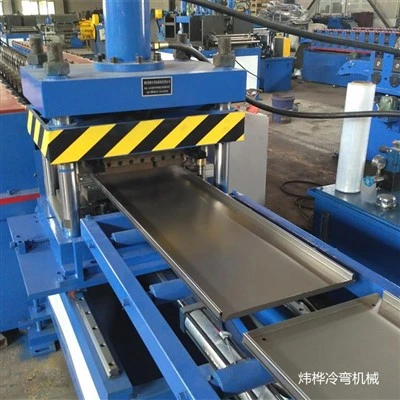
Stop settling for lines that can’t keep up with your regulatory and production needs. Stop wasting money on rejections and downtime. Our production lines are built for high-volume, reliable output, and with our proven flame-retardant modifications, they can meet the strictest standards without sacrificing efficiency. Reach out to us today to schedule a consultation and see how we can help your business grow.
Electrical Cabinet Profile Production Line References:
- Underwriters Laboratories. (2022). UL 94 Standard for Tests for Flammability of Plastic Materials for Parts in Devices and Appliances.
- International Electrotechnical Commission. (2021). IEC 60332-1-2: Tests on Electric Cables and Optical Fibre Cables Under Fire Conditions – Part 1-2: Single Cable or Insulated Wire Vertical Flame Test – Tests with Specified Heat Source.
- Extrusion Technology Association. (2023). Best Practices for Extruding Flame-Retardant Polymer Profiles for Electrical Enclosures.
- American National Standards Institute. (2022). ANSI/NEMA 250-2021: Enclosures for Electrical Equipment.
- Polymer Processing Journal. (2022). Dispersion of Inorganic Flame Retardants in Twin-Screw Extruders: Effects of Screw Design and Feed System Configuration.
Weifang Yue Jun Machinery Co., Ltd.
With abundant experience, we are one of the most professional electrical cabinet profile production line manufacturers in China. We warmly welcome you to buy durable electrical cabinet profile production line made in China here from our factory. We also accept customized orders.
Address: Kuiwen District, Weifang City, Shandong Province
E-mail: adrian@yuejunmachinery.com
WebSite: https://www.yuejunmachinery.com/
