If you’ve ever shopped for industrial film processing equipment, you know that floor space isn’t just a line item—it’s the backbone of your production workflow, especially when you’re investing in a multi-layer extrusion system like the ABC Three Layer Film Blowing Machine. As a supplier with 12 years of hands-on experience installing these machines across small food packaging operations and large-scale flexible film manufacturers, I’ve learned that guessing the floor plan leads to costly delays, cramped workspaces, and lost productivity before you even run your first roll of film. Let’s break down exactly how much space this machine needs, why each inch matters, and what factors you’ll need to account for to set it up right. ABC Three Layer Film Blowing Machine
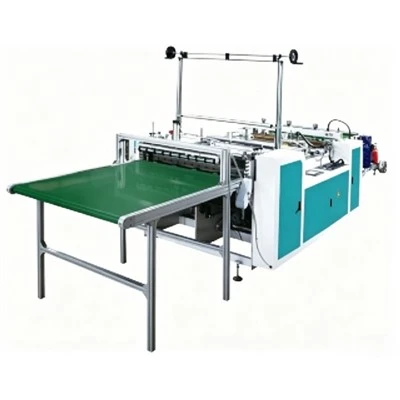
First, let’s start with the standard, baseline floor space for an ABC Three Layer Film Blowing Machine—this is the number we use for most of our off-the-shelf models, no custom configurations. The core machine itself (excluding auxiliary equipment) measures approximately 3.2 meters (10.5 feet) in length and 1.8 meters (6 feet) in width. But here’s the catch: you can’t set it up in a closet-sized spot. Operators need room to move safely, access control panels, clear jams, and monitor the extrusion process in real time. Our default recommendation for the core machine area is 5 meters (16.4 feet) in length by 3 meters (9.8 feet) in width. That extra space isn’t wasted—it’s for the operator’s station, emergency shutoff access, and small maintenance tools stowed in a nearby cabinet. I learned this the hard way early in my career: a customer in Ohio tried to skimp on space, squeezing the machine into a 3×2.5 meter nook. Three weeks in, an operator’s hand got caught on a loose fitting because there was nowhere to step back, and a 2-hour production halt turned into a 5-day wait for repairs, not to mention a $12,000 loss from spoiled material runs. That story has stuck with me, so I never lead with the core machine dimensions without adding the safety and workflow buffer.
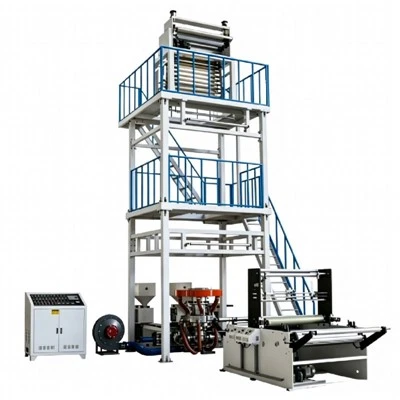
But wait—this is only the ABC Three Layer Film Blowing Machine’s operational footprint. You’ve got auxiliary equipment that’s non-negotiable, and that adds significant linear space along the length of the line. Let’s walk through the full production line, step by step, because every component needs its own space to function properly. Starting at the raw material end: you need material drying systems (most multi-layer lines use 3 separate dryers for each resin layer) and resin blending stations. Smaller dryers take up about 1.2 meters (4 feet) in length, but if you’re processing high-moisture resins like nylon or polyethylene, you’ll need desiccant dryers that run 1.8 meters (6 feet) long. Then comes the extrusion section: the three extruders for the ABC layers, mounted in a vertical or horizontal stack. The vertical stack (our most popular model for new facilities) adds about 1 meter (3.3 feet) to the core machine’s height, but only 0.5 meters (1.6 feet) to the footprint, since the extruders sit side-by-side or stacked vertically instead of extending out. The gear pump and screen changers for precise layer control add another 0.8 meters (2.6 feet) in length.
Next is the most space-intensive part of the line: the film handling and winding section. This is where the melted film is inflated into a bubble, cooled, collapsed, and wound into finished rolls. The cooling ring around the bubble requires at least 1.5 meters (5 feet) of clear space above the core machine to let the bubble expand without hitting ceiling beams or other equipment. The collapsing guider, which flattens the bubble into a double film, adds another 1 meter (3.3 feet) in length, and the edge trim units (which cut excess film scrap for recycling) take up 0.6 meters (2 feet) on either side. For winding, most customers go with automatic winders—either single-station or dual-station. A single-station winder needs 2.5 meters (8.2 feet) of length, while a dual-station winder (which lets you switch rolls without halting production) adds 1.5 meters (5 feet) more. Don’t forget the scrap take-up unit, which pulls the edge trim away from the line for recycling—another 1 meter (3.3 feet) of space at the end of the line.
Add all that up, and the total linear length of a standard ABC Three Layer Film Blowing Machine line is between 12 and 15 meters (39.4 to 49.2 feet), with a total width of 3 to 3.5 meters (9.8 to 11.5 feet). That’s a lot of space, but it’s non-negotiable for smooth operation. I recently worked with a snack food packaging company in Texas that upgraded from a 2-layer line to an ABC line, and they thought their existing 10-meter bay would work. They were wrong—they had to knock out a section of their production wall and move their palletizing station to accommodate the full line, but it was worth it: their downtime dropped by 40% in the first quarter because operators had room to move and winders ran without collisions.
Now, not all lines are the same. Custom configurations will change the floor space requirements, and that’s where we tailor recommendations to each customer’s needs. Let’s talk about common customizations that add or subtract space. For example, if you’re running thin films (less than 20 microns) for food packaging or agricultural mulch, you might add an inline printing unit or a surface treatment unit (corona treatment, to improve ink adhesion). A corona treatment unit adds about 2 meters (6.6 feet) to the line’s length, so you’ll need to add that to your total footprint. If you’re running thick, heavy-duty films (like 100+ micron films for construction sheeting or bulk bags), you might upgrade to a larger diameter bubble, which requires a taller ceiling (at least 5.5 meters, vs. 4 meters for standard lines) and more width on either side of the core machine to let the bubble expand without touching walls. In that case, we recommend adding 0.5 meters (1.6 feet) of clearance on each side of the line to avoid bubble instability.
Another big factor: facility layout and workflow. Do you need to integrate the line with an existing raw material storage area, or will raw materials be delivered directly to the line? Do you need space for finished roll storage next to the line, or will you have a separate warehouse? If you’re storing finished rolls near the line, add 3 to 4 meters (9.8 to 13.1 feet) of space at the end of the winding section for roll carts and temporary storage. For facilities that operate multiple shifts, you’ll also need space for a second operator’s station, which adds about 1.5 meters (5 feet) of space along the side of the line. We always do a site assessment for every customer, too—looking at ceiling height, door width (the full line needs to fit through doors during installation, so we make sure door openings are at least 3.8 meters wide), and power and utility connections (which need to be within 1 meter of the line’s start to avoid long, risky power cords).
I’ve also seen customers make mistakes that lead to wasted space. For example, some will set up the line against a wall, but that blocks access to the extruder maintenance ports—you need at least 0.5 meters of clear space on the back of the extruder section for nozzle changes and screw extraction. Others place the control panel too far from the line, making it hard for operators to adjust settings while monitoring the bubble. The control panel should be within 1 meter of the core machine’s front, so add that to your overall length calculation too.
So, to recap: for a standard, off-the-shelf ABC Three Layer Film Blowing Machine line, the baseline floor space is 12 meters (39.4 feet) in length and 3 meters (9.8 feet) in width. This includes all core components, safety clearance, and operator access. For custom lines, add 1 to 2 meters for inline units, adjust width based on bubble size, and add space for auxiliary storage and workflow needs. Always account for ceiling height (minimum 4 meters for standard lines, 5.5 meters for heavy-duty) and door clearance during installation.
Investing in an ABC Three Layer Film Blowing Machine is a major decision, and getting the floor space right is the first step to avoiding costly delays and downtime. Every facility is different, and that’s why we don’t just send a generic spec sheet—we work with you to map your existing space, adjust for custom needs, and make sure your line fits perfectly before it even arrives. If you’re ready to talk about your specific layout, budget, or production goals, we’re here to help. Reach out to schedule a consultation, and we’ll walk you through exactly how much space you need, no guesswork required.
ABA Three Layer Blown Film Machine References
- Extrusion Film Association. (2022). Design and Layout Guidelines for Multi-Layer Film Blowing Lines. EFA Technical Report Series.
- Plastics Machinery Manufacturers Association. (2021). Standard Footprint and Safety Requirements for Three Layer Co-Extrusion Lines. PMMA Industry Standards.
- International Organization for Standardization. (2020). Safety Requirements for Extrusion Machinery, Part 3: Film Blowing Lines. ISO 12100-3.
Ruian Jianhao Precision Machinery Co., Ltd.
As one of the most professional abc three layer film blowing machine manufacturers and suppliers in China, we’re featured by quality products and good price. Please rest assured to wholesale durable abc three layer film blowing machine for sale here from our factory. Welcome to contact us for customized service and quotation.
Address: No. 8, Jianshe Road, Beiyu Village, Shangwang Street, Ruian City, Wenzhou City, Zhejiang Province
E-mail: 1832333027@qq.com
WebSite: https://www.jianhaomachinery.com/
