If you’ve ever stopped by our booth at a manufacturing expo, or gotten a random email from me asking if you’re overworking your assembly line, you know I’m the kind of person who answers the questions you actually have—even the ones everyone else thinks are “too basic.” Today, that question is: How much does a cobot cost? I’ve been selling collaborative robots (that’s what a lot of folks call “cobots”) for 12 years now, and let’s be real: it’s not a number you can Google in 10 seconds, slap on a trade show flyer, and call it a day. If I gave you a single price right now, I’d be lying—either to you, or to myself. Let me break this down like I’d break it down for a shop foreman who’s never used a cobot before, because that’s the person who needs this answer most. Cobot
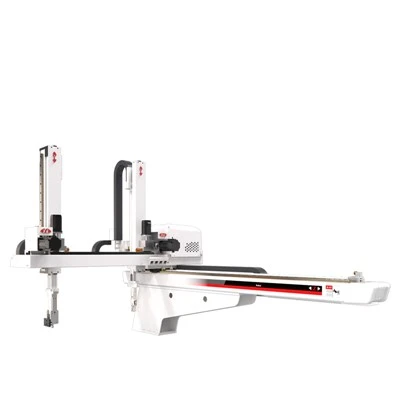
First, let’s get one thing straight: cobots aren’t industrial robots. I see this mix-up all the time, and it’s the root of why everyone’s price expectations are off. A traditional industrial robot costs way more upfront, requires a safety cage, needs a dedicated engineer to program it, and takes days to set up. They’re built for big, high-volume factories with lines that never stop. Cobots? They’re built for small and medium-sized businesses (SMBs) who can’t drop $100k on a robot, don’t have a separate automation team, and need something that can work right next to a human without a 10-foot safety fence. That core design difference is why their costs are totally different—and why your old industrial robot price tags don’t apply here.
When customers first reach out to me, the first thing I never skip is asking: “What job are you trying to get done?” Because that’s everything. A cobot doing repetitive pick-and-place for a snack packaging line is way different than one doing precision screw driving on electronic components, or one moving pallets around a warehouse loading dock. The size of the cobot (called its payload capacity and reach) changes everything, and that’s the biggest driver of the base price. Let’s be specific here, because numbers help. Our smallest entry-level cobot—great for light work like packing small parts or testing components—has a 3 kg (6.6 lb) payload and 600 mm (23.6 inch) reach. That model starts at around $18,000. It’s light, easy to move, and perfect for a 10-person machine shop or a 20-person contract manufacturer. Our mid-range model, which handles 10 kg (22 lb) and has a 1300 mm (51 inch) reach? That’s the workhorse of our line, used for tasks like palletizing boxes, welding small metal parts, or assembling automotive trim. That starts at around $32,000. Then we have our heavy-duty model, for jobs like moving 25 kg (55 lb) pallets or large machining parts. That one tops out at about $55,000.
Wait—hold on, before you do the math in your head and think “well, that’s less than I thought,” because the base price is just the start. Let’s talk about add-ons, because that’s where most hidden costs sneak up on people, especially if you’re new to cobots. You wouldn’t buy a pickup truck without deciding if you need a bed liner or a tow hitch, right? Same rule applies here. Let’s go through the most common add-ons our customers ask for, because these aren’t optional for most people.
First, end-of-arm tools (EOAT, we call them “end effectors” for short). That’s the part of the cobot that actually touches your work. If you’re picking up tiny fragile glass parts, you need a vacuum gripper, not a mechanical claw. A vacuum gripper for a small payload cobot is around $800, while a heavy-duty parallel gripper for palletizing can be $2,500. Then there’s software. A lot of people think cobots are hard to program, and for a long time, they were—but the software isn’t just a nice-to-have, it’s how you train the cobot. Our standard software is included, but if you need custom programming for a unique task, or integration with your existing machine (like a conveyor belt or your inventory management system), that’s extra. Typical custom integration for a small shop runs between $1,500 and $5,000, depending on how complex your setup is.
Safety gear—wait, I thought cobots don’t need cages? That’s true for most tasks, but if your cobot is working around other heavy equipment, or if you have multiple shifts using it, you might need additional safety features like force sensors (wait, most cobots have those standard, but sometimes upgraded for higher speed) or light curtains for extra peace of mind. Those add another $1,000 to $3,000 usually. And then there’s training. I know, I know, the salesman says training is included, and sometimes it is—but if your team has 10 people who need to be able to run and adjust the cobot, not just one engineer, that’s extra. On-site training for a full team is around $2,000 for a day.
Let’s do a real-world example, so this isn’t just numbers on a page. A customer of ours last year: a 25-person electronics assembly shop in Detroit. They were paying two line workers $18 an hour to sit all day, putting tiny screws into circuit boards—super repetitive, boring, high risk of carpal tunnel, and they were missing 10% of the screws on good days. They got our mid-range cobot, which has 10 kg payload and enough reach to reach the circuit board trays. They added a custom screw driving end effector, integration with their existing conveyor, and on-site training for their three line leads. Let’s add that up: base cobot $32,000, end effector $1,200, integration $2,800, training $2,000. Total for their setup: $38,000. Now, what’s their payback time? They cut two line worker shifts, so that’s $18 x 40 hours x 2 workers x 52 weeks = $74,880 a year in labor savings. That’s less than half a year to get their money back. That’s the part no price list will tell you: the total cost of a cobot is almost never just the upfront number, it’s the savings you get from not paying people to do boring, repetitive work.
Wait, but there are other costs most people don’t think about. Like, what about maintenance? Cobots are way simpler than industrial robots, but they still need regular checkups, software updates, and spare parts. Our service plan is $1,200 a year, which covers all software updates, priority support, and annual calibration. That’s a lot less than the $5,000 a year the average industrial robot costs for maintenance. And then there’s uptime. When a line worker calls out sick, you have to rearrange schedules. When a cobot needs a repair, we usually get a technician out in 48 hours, and most repairs are under $500, because cobot parts are designed to be easy to replace on-site, not like industrial robots that need to be shipped back to a factory.
Now, let’s talk about the things that don’t change the price but make a huge difference in whether it’s worth it for you. First, size of your business. A 10-person shop that’s only running one shift a day doesn’t need a $55,000 heavy-duty cobot—our entry-level $18,000 model is perfect. A 100-person factory with three shifts might need two mid-range cobots. Second, the task. If you’re doing something that only takes an hour a day, you don’t need a fancy model—our cobots can be programmed to do a task in 10 minutes a day, so you can use them for multiple jobs. A lot of customers use their cobot for pick-and-place in the morning, testing parts in the afternoon, and palletizing at night. Third, your team’s technical skill. If you have someone on staff who’s good with basic computers, you don’t need as much custom integration or training. If you’re the kind of shop where “tech support” means calling the 16-year-old down the street, that extra training is worth every penny.
I’ve seen too many companies come to me after getting a price from a big box automation site, and they’re shocked when that number doesn’t include anything. Those sites sell cobots like they’re a toaster: “$15,000, free shipping!” but don’t tell you the end effector is extra, the integration is extra, and the training is extra. When you buy from us, we don’t do that. We give you a full breakdown, no hidden fees, because we’ve been in this long enough to know that a customer who feels nickel-and-dimed is a customer who won’t come back—and these days, word of mouth is everything in the cobot business.
Let’s also talk about the alternatives, because price is relative. If you’re thinking “$30,000 for a robot? That’s a lot,” let’s compare it to what you’re spending now. Let’s say you have a line worker doing palletizing, and you’re paying them $20 an hour, plus benefits, plus overtime when you’re busy, plus the cost of lost productivity when they make a mistake, plus the cost of workers’ comp claims for repetitive motion injuries. The average line worker doing palletizing costs you about $45,000 a year total, benefits and all. Our mid-range cobot starts at $32,000, and it can run 24/7, no breaks, no benefits, no workers’ comp. That’s a no-brainer if you’re doing high-volume palletizing. For smaller tasks, like packing or testing, you’re looking at $18,000 for a cobot, which pays for itself in about 6 months if you have a part-time line worker doing that job.
I get it, though. Spending $18,000 is still a big decision. That’s why we offer flexible financing, too. We work with local lenders who specialize in small business automation, so you can pay as little as $350 a month for our entry-level cobot, no down payment, for 5 years. The monthly payment is less than you’re probably paying that line worker’s hourly wage for the same task. That’s not a sales pitch—that’s math.
Wait, let’s address the elephant in the room: why are cobots cheaper than they used to be? Ten years ago, a mid-range cobot would have cost twice as much as it does now. The technology has gotten better, more companies are making cobots, and the market has matured. But that also means there are a lot of low-quality cobots out there now, from companies you’ve never heard of, that sell for half our price. I’ve seen a couple of them break after 6 months, because their parts are cheap, their software is glitchy, and when you call for support, you get a guy in another country who doesn’t speak English well. We don’t cut corners like that. Our cobots are made with high-grade steel, our software is updated for free for life, and our support team is based right here, so if you call at 8 a.m. on Monday, you get a person who knows your name and your cobot, not a generic ticket system. That’s worth the extra money, if you ask me.
Let me wrap this up, because I know you’re busy. If you’re asking “how much does a cobot cost?” the answer isn’t a single number. It’s based on what job you need it to do, what size cobot fits that job, what add-ons you need, and how you want to pay for it. The average total cost for a fully set-up cobot for most SMBs is between $25,000 and $40,000, but that can go lower or higher depending on your specific needs. The only way to get an exact number is to talk to someone who’s not going to lie to you, who’s going to ask you about your actual tasks, not just push the most expensive cobot on you.
If you’re tired of paying people to do boring, repetitive work that leads to burnout, mistakes, and high turnover, if you’re looking to save money on labor and make your shop more efficient, you should reach out. I’ll walk you through every step, give you a transparent quote, no hidden fees, no pressure. I’ll even come to your shop, meet your team, and show you how a cobot would work in your space, not just in a demo room. That’s what we do here.
Don’t get me wrong—cobots aren’t for every business. If you’re a small craft shop that only makes 10 custom pieces a year, a cobot is a waste of money. But if you’re a shop running 500 units a month, doing the same task over and over, or if you’re looking to free up your skilled workers to do the jobs that need a human touch, a cobot is one of the best investments you can make.
So next time someone asks you “how much does a cobot cost?” don’t just give them a number. Give them the context: it’s an investment in your team, in reducing mistakes, in saving money long-term, and in making your business more resilient. And if you want to talk specifics, we’re here. We’re not just selling robots—we’re solving problems, same as you are.
Pick and Place Robot References
- International Federation of Robotics. (2023). Collaborative Robot Market Report.
- US Small Business Administration. (2022). Cost-Benefit Analysis of Industrial Automation for SMBs.
- Cobot Manufacturer Association. (2023). Total Cost of Ownership Guide for Collaborative Robots.
- Bureau of Labor Statistics. (2023). Occupational Wages and Labor Costs for Production Line Workers.
Robotic Technology (GD) Co., Ltd.
Robotic Technology (GD) Co., Ltd. is one of the most experienced cobot manufacturers and suppliers in China, also supports custom service and one year warranty. Please feel free to wholesale CE approved cobot for sale here from our factory. Contact us for quotation.
Address: Room 102, No. 30,Hengfeng 2nd Road,Daguo, Changping Town, Dongguan City,Guangdong,China
E-mail: admin@iroboticplus.com
WebSite: https://www.rb-tic.com/
