If you’ve ever watched road construction crews lay the base for a new subdivision, a highway expansion, or even a community park access road, you’ve probably seen a road roller rumble across the site. But most folks outside the construction industry don’t stop to ask why there are two distinct types: static road rollers and dynamic road rollers. As a road roller supplier who’s worked with contractors, civil engineers, and small business owners across the region for over a decade, I’ve heard more than a dozen questions about the difference between these two machines—and how choosing the right one can make or break a project’s timeline, budget, and long-term durability. Let’s break this down plainly, no jargon, no fluff, just what you need to know to pick the right roller for your next job. Road Roller
First, let’s start with the basics: what both machines do, because their core goal is identical. Every road project starts with layers: subgrade (the compacted dirt under the whole road), base course (crushed stone or gravel on top of the subgrade), and then asphalt or concrete for the finished surface. The point of a road roller is to compress those layers tightly so they don’t shift, crack, or settle unevenly over time. A weak, uncompacted base leads to potholes, sinkholes, and costly repairs within a few years—so this equipment isn’t just a convenience, it’s non-negotiable for long-lasting infrastructure.
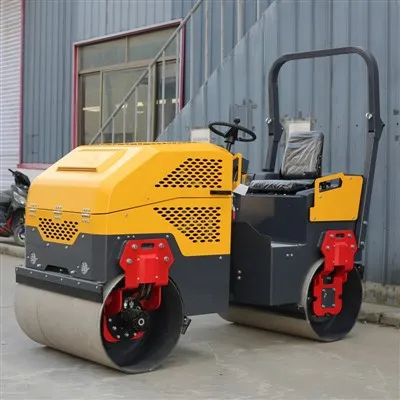
Now, the static road roller, also called a “smooth drum roller” or sometimes a “dead weight roller” to new folks on-site. Let’s paint a picture of how it works: imagine a large, thick steel cylinder, usually 6 to 8 feet wide, attached to the front of a tracked or wheeled cab. That cylinder’s weight is the only force it uses to compact material. A standard static roller for small to medium jobs weighs between 5 and 15 tons; the heaviest ones for major highways can hit 20 tons or more. There’s no moving part inside the drum to add force, no vibration, no extra mechanisms—just pure, steady weight pressing down on the material as the roller moves back and forth over the site.
You might be wondering: why would anyone use a static roller when there’s another option? The answer comes down to what it’s best at, and its limitations. Static rollers shine for thin, delicate compaction jobs where vibration could cause more harm than good. Think about compacting the top layer of asphalt on a residential driveway: asphalt is soft when it’s first laid, and too much vibration would ripple it, create uneven surfaces, or even push the hot asphalt up into the roller’s drum, ruining both the machine and the finished surface. Static rollers are also cheaper to operate in some cases—they have fewer moving parts, so maintenance costs are lower, and fuel efficiency is better than dynamic rollers for light, frequent use on small sites. For example, a contractor paving a 500-foot private road for a housing development won’t need the power of a dynamic roller; a 7-ton static roller will do the job quickly, safely, and on budget.
But static rollers have clear limits, especially on larger or denser projects. Their only force is weight, so to compact thick layers of base course or soil, they’d need to be extremely heavy—think 30+ tons— which can be hard to maneuver, especially on uneven ground. They also require many more passes over a site to achieve the same compaction density as a dynamic roller; a static roller might need 8 to 10 passes to get the base to the required standard, while a dynamic roller can do it in 3 to 5. For a major highway project that covers miles, those extra passes add up to days of extra work, which delays the project, adds labor costs, and can put the timeline for opening the road at risk. That’s where dynamic road rollers come in.
Dynamic road rollers are the workhorses of heavy construction. Unlike static rollers, their drums have a built-in mechanism that creates a rapid, high-impact vibration—usually 20 to 50 times per second—while also maintaining the machine’s total weight. This vibration doesn’t just press down; it disrupts the individual particles in the material, letting them shift and settle into a tighter, more uniform arrangement than static weight alone can achieve. Think of it like shaking a box of marbles: if you just press down on the top, they might shift a little, but if you vibrate the box, they lock together much more tightly, with no air gaps between them. That’s exactly what a dynamic roller does to crushed stone, gravel, or soil.
Dynamic rollers come in two main types, too, which is a detail that matters for contractors who need to match the machine to their project: vibrating drum rollers (the most common, with vibration only on the front or both drums) and oscillating rollers, which add a side-to-side rocking motion to the vibration. Oscillating rollers are great for compacting slopes or curbside areas, because they keep the drum flat against the surface even when the ground is angled, while standard vibrating rollers are ideal for flat, large areas like highway mainlines.
Now, let’s get into the key differences that should drive your choice, beyond just how they work. First, compaction density: dynamic rollers almost always produce a denser, more uniform compaction than static rollers, especially for thick layers or heavy base materials. For civil engineers working to meet state or federal road safety standards, that’s a non-negotiable. Static rollers might only reach 90% compaction on a good pass, while dynamic rollers can hit 95% or higher, which is the threshold required for most public road projects. Second, speed of work: dynamic rollers cover more ground in less time, cutting project timelines and labor costs. A 10-mile highway project that would take a static roller crew 10 days to finish can often be done in 5 days with a dynamic roller. Third, material compatibility: static rollers are best for thin, flexible materials like asphalt or light subgrade, while dynamic rollers work on everything from soil and aggregate base to thin asphalt lifts.
That said, dynamic rollers aren’t perfect, and they aren’t the right choice for every job. The vibration that makes them so effective for heavy compaction can damage delicate surfaces—like the old, thin asphalt on a downtown street that’s already cracked and aged. Using a dynamic roller there would just break the old surface apart, requiring more work to patch before repaving. Dynamic rollers also have higher operating costs: their vibrating mechanisms mean more parts to maintain, higher fuel use, and occasional repairs that static rollers don’t need. For a small, low-budget job like a 100-foot driveway or a small parking lot, a dynamic roller would be overkill, costing the contractor more in machine rental, fuel, and maintenance than the job would be worth.
Over the years, I’ve seen contractors make mistakes with both choices, and those mistakes come back to haunt them. I once worked with a small paving crew that used a static roller for a large housing development’s main road base. They finished the job on time and under budget, but two years later, the road had deep potholes in every other block because the static compaction wasn’t dense enough. They ended up having to mill off the old asphalt, re-compact the base with a dynamic roller, and relay the whole surface—costing them three times what they saved by picking the wrong roller. On the flip side, I worked with another contractor who used a dynamic roller for a small residential driveway. The vibration rippled the asphalt so badly that the homeowner had to get a whole new driveway within a year. Those stories are why I always take the time to ask a few questions when a customer comes to me for a roller: how big is the job? What material are you compacting? What’s the timeline? What’s your budget? No two jobs are exactly the same, and the right roller depends on all of those factors.
Another thing that surprises a lot of people is that modern road rollers have blurred some of the lines between static and dynamic. There are “hybrid” rollers that can switch between static and dynamic mode, letting contractors use the same machine for both a base course compaction (dynamic mode) and the finish asphalt layer (static mode). That’s a game-changer for medium-sized jobs, because it means a contractor doesn’t have to rent two separate machines—saving time and money on transport and rental costs. I’ve seen these hybrid rollers grow in popularity over the past five years, especially among small to mid-sized paving companies that take on a mix of jobs from driveways to small commercial parking lots.
If you’re still not sure which type is right for your project, here’s a quick cheat sheet to keep in mind. Choose a static road roller if: your job is small (under 1,000 square meters), you’re compacting thin asphalt or light subgrade, you’re working on a tight budget, or you need to avoid vibration on a delicate surface. Choose a dynamic road roller if: your job is large (over 1,000 square meters), you’re compacting thick base courses or heavy soil, you need to meet high compaction standards for a public or commercial project, or you need to finish the job quickly. And if your job falls in the middle, a hybrid roller might be the sweet spot for your needs.
As a road roller supplier, my goal isn’t just to sell a machine—it’s to help you pick the one that will make your job go smoothly, on time, and without costly surprises down the line. I’ve spent years working with all types of rollers, training operators, and troubleshooting issues on job sites, so I can walk you through the pros and cons of every model, match the size and type of roller to your project, and even help with maintenance tips to keep your machine running for years.
If you’re planning a road project, large or small, and you need to talk through which road roller is the right fit, I’m here to help. Whether you’re renting a machine for a single job or looking to add a new roller to your fleet, reach out to start a conversation about your needs, timelines, and budget. We can walk through your project details, show you the options that will work best for you, and make sure you have the right equipment to get the job done right the first time.
Loader Reference:
- American Association of State Highway and Transportation Officials (AASHTO). Standard Specifications for Highway Bridges, Section 3: Subgrade and Base Course Compaction.
- National Asphalt Pavement Association (NAPA). Compaction Guidelines for Hot Mix Asphalt, 5th Edition.
- Construction Equipment Association (CEA). Road Roller Specification and Safety Standards, 2022.
- Federal Highway Administration (FHWA). Compaction Technology for Road Construction: Best Practices Guide.
Jining Sunsail Machinery Co., Ltd.
With abundant experience, we are one of the most professional road roller manufacturers and suppliers in China. We warmly welcome you to buy high-grade road roller made in China here from our factory. For price consultation, contact us.
Address: Room 410, Digital Industry Building, Rencheng District, Jining City, Shandong Province,China
E-mail: Sunsail_machinery@163.com
WebSite: https://www.sunsailmachine.com/
