What is the weight of Standard Expanded Metal per square meter? Standard Expanded Metal
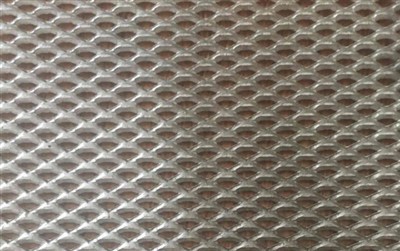
As a supplier of standard expanded metal, I often get asked about the weight of our product per square meter. Understanding the weight is crucial for various applications, from construction to industrial uses. In this blog post, I’ll delve into the factors that influence the weight of standard expanded metal and provide a detailed explanation of how to calculate it.
Factors Affecting the Weight of Standard Expanded Metal
The weight of standard expanded metal per square meter is determined by several key factors. These include the base material, the thickness of the original sheet, the expansion pattern, and the strand width and length.
Base Material
The type of base material used in the production of expanded metal has a significant impact on its weight. Common materials include mild steel, stainless steel, aluminum, and copper. Each material has its own density, which directly affects the weight of the final product. For example, mild steel has a density of approximately 7850 kg/m³, while aluminum has a density of around 2700 kg/m³. This means that for the same size and pattern, expanded metal made from mild steel will be significantly heavier than that made from aluminum.
Thickness of the Original Sheet
The thickness of the original sheet before expansion is another important factor. Thicker sheets will naturally result in a heavier expanded metal product. The thickness is usually measured in millimeters or inches, and it can vary depending on the specific requirements of the application. For instance, a thicker sheet may be used in applications where greater strength and durability are needed, such as in industrial flooring or security fencing.
Expansion Pattern
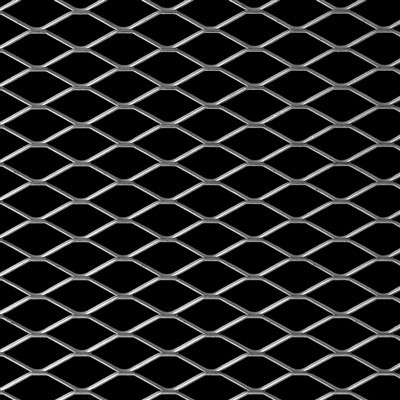
The expansion pattern refers to the way the metal sheet is cut and stretched to create the expanded metal. Different patterns have different open areas and strand configurations, which can affect the weight. Common expansion patterns include diamond, hexagonal, and square. The open area percentage of the pattern also plays a role. A higher open area means less metal is present in the expanded sheet, resulting in a lower weight per square meter.
Strand Width and Length
The width and length of the strands in the expanded metal also contribute to its weight. Wider and longer strands generally mean more metal is used, leading to a heavier product. The strand dimensions are determined by the expansion process and the specific pattern used.
Calculating the Weight of Standard Expanded Metal per Square Meter
To calculate the weight of standard expanded metal per square meter, you need to know the density of the base material, the thickness of the original sheet, and the open area percentage of the expansion pattern. Here’s a step-by-step guide on how to do it:
- Determine the density of the base material: As mentioned earlier, different materials have different densities. You can look up the density values for common materials in reference books or online resources. For example, if you’re using mild steel, the density is approximately 7850 kg/m³.
- Measure the thickness of the original sheet: Use a caliper or a micrometer to measure the thickness of the sheet before expansion. Make sure to measure in the appropriate units (millimeters or inches).
- Find the open area percentage of the expansion pattern: The open area percentage is the ratio of the open space in the expanded metal to the total area of the sheet. This value can usually be obtained from the manufacturer or supplier. For example, if the open area percentage is 50%, it means that half of the sheet is open space.
- Calculate the weight using the following formula:
- First, calculate the volume of the metal in one square meter of the expanded metal. The volume can be found by multiplying the thickness of the original sheet by the area of one square meter and then multiplying by (1 – open area percentage).
- Then, multiply the volume by the density of the base material to get the weight.
Here’s an example calculation:
Let’s say you have a standard expanded metal made from mild steel with a thickness of 2 mm and an open area percentage of 60%.
- The density of mild steel is 7850 kg/m³.
- The thickness of the original sheet is 2 mm, which is 0.002 m.
- The open area percentage is 60%, so (1 – 0.6) = 0.4.
The volume of the metal in one square meter is 0.002 m x 1 m² x 0.4 = 0.0008 m³.
The weight of the expanded metal per square meter is 0.0008 m³ x 7850 kg/m³ = 6.28 kg.
Importance of Knowing the Weight
Knowing the weight of standard expanded metal per square meter is essential for several reasons.
Structural Design
In construction and engineering projects, the weight of the expanded metal is a critical factor in structural design. Engineers need to ensure that the structure can support the weight of the expanded metal and any additional loads. For example, in a building’s flooring system, the weight of the expanded metal will affect the design of the supporting beams and columns.
Shipping and Handling
The weight of the expanded metal also impacts shipping and handling costs. Heavier products require more resources for transportation and storage. By knowing the weight per square meter, you can accurately estimate the shipping costs and plan for proper handling and storage.
Cost Estimation
The weight of the expanded metal is directly related to its cost. Since the price of the base material is usually calculated per unit weight, knowing the weight per square meter allows you to estimate the cost of the product more accurately. This is important for budgeting and cost control in projects.
Our Standard Expanded Metal Offerings
As a supplier of standard expanded metal, we offer a wide range of products to meet different customer needs. Our expanded metal is available in various materials, including mild steel, stainless steel, and aluminum. We also offer different expansion patterns and thicknesses to ensure that you can find the right product for your application.
We take pride in the quality of our expanded metal. Our manufacturing process is carefully controlled to ensure consistent quality and accurate dimensions. We use high-quality base materials and advanced production techniques to produce expanded metal that is strong, durable, and reliable.
Contact Us for Your Expanded Metal Needs
If you’re interested in purchasing standard expanded metal, we’d be happy to assist you. Our team of experts can help you choose the right product based on your specific requirements, including the weight per square meter. We can also provide you with detailed information about our products, pricing, and delivery options.
Round Hole Perforated Metal Whether you’re working on a small DIY project or a large-scale industrial construction, we have the expanded metal solution for you. Contact us today to start a conversation about your expanded metal needs. We look forward to working with you and helping you find the perfect product for your project.
References
- ASM Handbook Volume 1: Properties and Selection: Irons, Steels, and High-Performance Alloys.
- Aluminum Association. Aluminum Design Manual.
- Various industry publications on metal fabrication and expanded metal technology.
Anping Yilida Metal Wire Mesh Co., Ltd.
Anping Yilida Metal Wire Mesh Co., Ltd. is one of the most reliable standard expanded metal manufacturers and suppliers in China, also supports customized service. Please feel free to buy bulk high quality standard expanded metal made in China here from our factory.
Address: Wire Mesh Development Zone, Anping, Hebei Province, China
E-mail: sales@wiremesh-yg.cn
WebSite: https://www.yilidametal.com/
