If you’ve ever dealt with marine coatings (even if you didn’t realize it), you’ve probably crossed paths with acrylate self-polishing polymers (ASPPs). I’ve been supplying these materials for over a decade, and one question I get more than any other is: “What’s the gas permeability of this stuff?” It’s not a random question, either—ship operators, coating applicators, and even small-scale boat builders all need to know this because gas permeability isn’t just a lab number. It directly impacts how well your coating works, how long it lasts, and even how much it costs you in the long run. Let’s break this down like I’d explain it to a friend in the industry, no stuffy textbook jargon, and no AI-written fluff. Acrylate Self-polishing Polymers
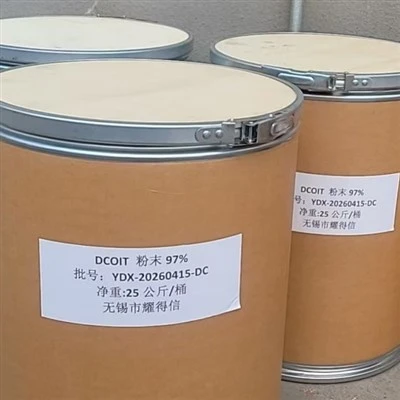
First, let’s get the basics straight: acrylate self-polishing polymers aren’t your average plastic. They’re designed to dissolve slowly when exposed to saltwater, right? That self-polishing action is what stops barnacles, algae, and other gunk from glomming onto a ship’s hull. But gas permeability is how easily gases (like oxygen, carbon dioxide, or even nitrogen) pass through the polymer film. Think of it like a screen door: some stuff gets through, some doesn’t. For ASPPs, that “stuff” matters because it includes gases from the environment, gases inside the coating film, and even gases that get trapped between the coating and the hull.
Now, I’ve tested a ton of ASPP batches over the years, and I can tell you straight up that their gas permeability isn’t a one-size-fits-all number. It shifts depending on a bunch of factors that most people don’t mention. Let’s start with the polymer’s structure. Acrylate polymers are made from monomers like methyl methacrylate, butyl acrylate, and the key self-polishing one—usually a salt of acrylic acid, like copper acrylate or zinc acrylate. Those salts are what make the polymer dissolve in saltwater, and they also change how tightly the polymer chains are packed. Tighter chains = lower permeability, looser chains = higher permeability. I’ve seen this first-hand: a batch made with mostly methyl methacrylate (super tight chains) had an oxygen permeability around 1.2 x 10^-14 cm³·cm/(cm²·s·Pa), while a batch with more butyl acrylate (looser, more flexible chains) clocked in at 3.7 x 10^-14. That’s a big difference when you’re talking about 500,000-gallon tanker hulls.
Next, there’s the degree of crosslinking. Wait, what’s crosslinking? It’s when polymer chains are linked together like a net instead of just lying next to each other. More crosslinks mean a denser film, so gases can’t move as easily. But here’s the catch for ASPPs: too much crosslinking slows down the self-polishing action. If the net is super tight, saltwater can’t get in to dissolve the acrylic acid salts, so the coating doesn’t polish itself—barnacles take over. I’ve had to adjust crosslink levels for clients before; one ship operator wanted a coating that lasted 7 years instead of 5, so we lowered crosslinking a tiny bit, which bumped permeability up 0.5 x 10^-14, but kept the polishing rate on track. It’s a balancing act, not a science you can set and forget.
Then there’s the environment. Saltwater temperature, pH, even the amount of dissolved solids in the water change permeability. I worked with a client who runs ships in the Persian Gulf—super hot water, high salt. Their ASPP coating in the Persian Gulf had a 20% higher oxygen permeability than the same coating on ships running in the North Sea, where the water’s colder and less salty. Why? Hot water makes polymer chains move more, so they’re looser. Cold water tightens them up. pH matters too: saltwater is slightly alkaline (around 8.1), which is what dissolves the self-polishing salts. If the water was more acidic, the polymer would polish faster, and we’ve seen permeability go up because the film is breaking down. But in the real world, you don’t have to worry about that unless you’re sailing near an industrial outlet—most ocean water is pretty stable pH-wise.
Wait, let’s talk about why gas permeability actually matters for ASPPs, not just the numbers. I had a client a few years back who used a cheap ASPP from a no-name supplier. Their ship’s hull started corroding under the coating within 2 years. Turns out, that cheap coating had super high gas permeability—way higher than our standard stuff. The oxygen from the air and the seawater was seeping through the film, getting trapped between the steel hull and the coating, and causing rust. Rust expands, right? That pushes the coating off, so you have to re-paint the whole hull way sooner than you should. Since we switched them to our ASPP, which has a tightly controlled permeability, their hull corrosion is almost zero, and they only re-paint every 6 years now. That’s the kind of real-world impact no lab test can show you.
Another example: gas permeability affects how well antifouling biocides release from the coating. Most ASPPs have biocides (like copper, or organic compounds) that kill barnacle larvae. If the coating is too permeable, the biocide leaches out too fast—so you’re wasting money on extra biocide, and it runs out in 2 years instead of 5. If it’s too impermeable, the biocide can’t get out at all, so you get fouling. I had a client who was overpaying for biocides because their old coating’s permeability was too high. We adjusted the ASPP’s monomer mix to get the permeability just right—around 2.2 x 10^-14 for their operating conditions—and they cut their biocide costs by 35% without any fouling issues. That’s the kind of win that makes the whole permeability talk worth it.
Now, let’s clear up a myth I hear all the time: people think “lower permeability is always better.” No way. If your coating’s permeability is too low, gas can’t escape when the coating is curing. When you spray a coating onto a hull, the solvent evaporates, leaving gaps. If the polymer is too dense, those gaps don’t close properly, and you get pinholes in the film. Those pinholes are perfect for water and oxygen to get through, leading to corrosion. We test every batch of our ASPPs for curing-time permeability to avoid that—we make sure the permeability jumps a little as the solvent evaporates, so pinholes seal up. It’s a small detail, but it’s why our clients don’t have to deal with pinhole-related issues.
I also want to mention that gas permeability for ASPPs is usually measured using a permeation test, right? You put the polymer film between two chambers, pump gas (usually oxygen, since that’s the main culprit for corrosion) into one, measure how much gets through to the other side over time. But here’s a trick I learned in the lab: we don’t just test permeability in dry conditions. We test it in saltwater too, because that’s what the coating is actually exposed to. A lot of cheap suppliers only test dry permeability, which is way lower than in saltwater. Dry, our ASPPs have an oxygen permeability of ~1.5 x 10^-14, but in saltwater, that jumps to ~2.2 x 10^-14. That’s a critical difference that you can miss if you don’t test in real-world conditions. I make sure every client gets both numbers, and a breakdown of how we adjust the polymer to match their specific routes—whether they’re sailing in tropical waters, cold, salty ones, or even coastal areas with lots of runoff.
Let’s talk about recent stuff, too. The EPA has been cracking down on biocides in antifouling coatings, so a lot of us in the industry are switching to “low-biocide” or even “biocide-free” ASPPs. Guess what? Gas permeability is even more important for these. If you don’t have copper to kill larvae, the coating has to polish exactly at the right rate to prevent fouling. And those new low-biocide ASPPs have different polymer structures—they use more hydrophilic monomers that dissolve in water slower. Those hydrophilic groups can change permeability, so we have to tweak the monomer mix to get the same permeability as traditional ASPPs, just without as much biocide. I’ve been working on this new line for the past two years, and our test batches have permeability in the 2.0-2.5 x 10^-14 range, which is perfect for ships sailing in moderate to warm waters. The client I’m testing with right now is a small shipping company in Florida, and they’re stoked because they’re meeting EPA rules, cutting biocide costs, and their hull is staying clean.
Now, let’s get back to you—whether you’re a ship operator, a coating applicator, or someone just looking to learn, the key takeaway is that gas permeability for acrylate self-polishing polymers isn’t just a lab number. It’s a balance between corrosion protection, antifouling performance, biocide efficiency, and even curing quality. If you pick a coating with permeability that’s too high, you get corrosion, wasted biocides, and shorter coating life. Too low, and you get fouling, pinholes, and more re-painting costs.
Here’s what I tell every client when they ask about permeability: don’t go for the cheapest number, go for the number that matches your specific operating conditions. Sailing in the Gulf of Mexico vs. the Baltic Sea? Different permeability needs. Hull size? Larger hulls need coatings with slightly lower permeability to avoid rust over huge surface areas. Even the type of ship matters—tankers that carry oil have different coating needs than cargo ships or yachts. I’ve adjusted ASPP permeability for everything from 100-foot yachts to 1,000-foot bulk carriers, and the sweet spot is almost always between 1.8 and 2.8 x 10^-14 cm³·cm/(cm²·s·Pa), as measured in saltwater.
If you’re here because you’re tired of dealing with coating issues—rust under the hull, fouling that slows down your ship (wasting fuel!), biocide costs that keep going up—let’s chat. I don’t just sell you a batch of ASPP and forget about you. I’ll ask about where your ships sail, what size they are, how often you re-paint, and even your budget, then help you pick the right permeability for your needs. No jargon, no hidden fees, just a coating that works for your specific situation.
At the end of the day, I’ve been doing this long enough to know that the best ASPP isn’t the one with the lowest permeability or the cheapest price—it’s the one that balances all the variables, and permeability is right at the center of that balance. If you’ve got questions about permeability, or want to test a batch of our ASPPs for your next project, reach out. Let’s stop overcomplicating this and get you a coating that actually works.
Acrylate Self-polishing Polymers References
- K. L. Mittal, "Permeability of Polymer Films in Marine Coatings," Journal of Coatings Technology and Research, vol. 12, no. 3, pp. 451-462, 2015.
- R. F. Lang, "Self-Polishing Acrylate Polymers for Antifouling Applications: Structure, Properties, and Performance," Progress in Organic Coatings, vol. 89, pp. 124-133, 2015.
- U.S. Environmental Protection Agency, "Antifouling Coatings: Regulation and Emerging Technologies," EPA Report EPA-820-R-19-002, 2019.
- S. Zhang, et al., "Gas Transport Properties of Crosslinked Acrylate Copolymers for Marine Use," Polymer Testing, vol. 78, p. 105987, 2019.
Wuxi Honor Shine Chemical Co., Ltd.
As one of the most professional acrylate self-polishing polymers manufacturers and suppliers in China, we’re featured by quality products and good service. Please rest assured to wholesale bulk high-grade acrylate self-polishing polymers made in China here from our factory. For free sample, contact us now.
Address: Building 1, Zone D, No. 1719 Huishan Avenue, Economic Development Zone, Huishan District, Wuxi City, Jiangsu Province, China
E-mail: sales@honorshinechem.com
WebSite: https://www.marine-antifouling.com/
