Hey there, fellow runners and race organizers! Let’s cut to the chase – if you’ve ever scrolled through Instagram after a weekend race, you’ve probably seen people posting shiny little discs labeled “running medal” or “race medal” and wondered if they’re the same thing. Spoiler: they’re not. And as someone who’s been part of the Running Medals crew for like 5 years, designing, printing, and shipping hundreds of thousands of these bad boys, I’m here to break down the real differences (no stuffy jargon, promise). Running Medals
First off, let’s get one thing straight: I didn’t always know this. Early in my time here, I’d just call both “medals” and move on – until a marathon director hit me up, all frustrated, saying, “You sent me running medals for my city half marathon? No one’s gonna hang these.” That’s when it clicked. The line between these two isn’t just marketing fluff; it’s tied to what people actually care about when they cross that finish line. Running medals are for runners who log miles on their own, right? Solo sessions at 5 a.m., treadmill sprints, weekend long runs where it’s just you and your playlist. Race medals? They’re for the organized chaos – the road races, the 5Ks, the marathons where you’re surrounded by 10k other people, cheering bands, and that awkward water station guy who hands you a cup like you’re doing him a favor.
But let’s dig deeper than the basic definition. Let’s start with running medals. What’s the vibe here? They’re not about a specific event – they’re about consistency. Think of that runner who hits a 100-mile month and wants a little something to prove it, or someone who completed their first half marathon training cycle on their own. We designed running medals to feel personal, not like a one-off race trophy. Most of them are smaller, lighter – perfect for stacking on a necklace or a keychain, not just a shelf. The designs are usually minimalist: a simple number (like 500 for 500 miles), a tiny runner silhouette, or a date range like “Jan – Dec 2024.” No big event logos, no sponsor plastered all over the front. Because they’re for your journey, not someone else’s race.
Wait, let’s talk materials, too. A lot of running medals are made with softer finishes – matte silver, frosted gold, even acrylic sometimes. Because when you’re wearing a medal every day on your keychain, it doesn’t need to be super bulky or shiny. We did a test last year where we made a few extra running medals with a gloss coat, and people said they looked too “formal” – like something you’d only take out for show. No one wants that. The point of a running medal is to be a constant reminder, not a fancy keepsake.
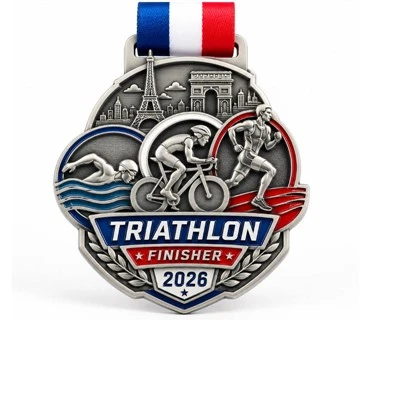
Now, race medals – those are the ones you see everywhere after a public event. These are big. Like, the kind that needs a ribbon so wide it takes up half your backpack. The designs are bold: they have the race name, the year, the city skyline, sponsor logos, maybe a special icon (like a tree for a trail race or a finish line tape). Materials are heavy duty – thick zinc alloy, polished gold or bronze, sometimes with enamel fills that pop so much they’re visible from a mile away. Why? Because race medals are for showing off, plain and simple. You cross a finish line with 10,000 people, you earned a big, noticeable medal to hang on your wall. It’s a status symbol, a story you can tell at the water cooler for weeks.
Let’s get into the purpose part, because that’s where the real difference hits. Running medals are a reward for your effort, regardless of anyone else. A runner might get one for finishing a Couch to 5K program, or for hitting a personal milestone like 1,000 miles, or just for sticking to their routine when everything else in life is chaotic. They’re flexible – you don’t need an official race to get one. We even have runners who order running medals for their friends who are training for a big race, as a little morale boost. It’s a personal trophy, not a competition prize.
Race medals? They’re official. They’re given out by event organizers as a reward for completing a specific, timed event. There’s a time limit, a set course, volunteers, timing chips, all that stuff. The whole point of a race is to compare yourself to others (and to your own past self), so the medal needs to reflect that. If you run a marathon, your race medal has a marathons distance, your bib number might even be etched on the back. It’s a documentation of a specific moment in time, not just a general achievement.
Wait, let’s throw in a real example to make this concrete. Last month, we had two orders almost identical: one from a runner who wanted a “100-mile training” medal for herself, and one from a small town 10K race director who needed race medals for his event. The runner’s order was 2 inches wide, matte silver, with a tiny “100” on the front and her initials on the back. The race medals were 3.5 inches, polished bronze, with the town name, “Annual Main Street 10K,” a little running shoe graphic, and sponsor logos from the local bakery and bike shop. Total different vibes, same basic thing – metal with a ribbon – but worlds apart in what they mean.
Another thing: how they’re used. Running medals go everywhere. They’re on gym bags, keychains, backpack zippers, even phone cases. I’ve seen a guy at our local coffee shop with a running medal for his 5K streak attached to his laptop. It’s a subtle flex, but only other runners will get it. Race medals? They’re displayed. On a medal hanger on the wall, on a shelf next to your marathon training book, maybe even on your fridge for a month. You don’t clip a race medal to your car keys – that would be like hanging a high school state championship trophy on your grocery list. It’s too important, too tied to that specific event.
Wait, let’s address a common confusion: what about virtual races? Because virtual races are huge now, right? Some people group them with running medals, some with race medals. From where we sit, virtual races can go either way. If it’s a virtual race where you log your own miles and order a medal, and the design is general (like “2024 Virtual Runner”), that’s a running medal. If it’s a virtual race tied to a specific event (like “Virtual Boston Marathon”), with the same design as the real race’s medal? That’s a race medal. Because even though you didn’t run in Boston, it’s tied to that official event’s identity.
Also, let’s talk about customization. We get a lot of requests for running medals that are super personal – like a medal with a dog’s paw print for a runner who trains with their pup, or a rainbow design for a pride run. Race medals are customizable too, but mostly for event-related things: course maps, sponsor logos, race themes. You won’t see a race medal with a personal photo on it, but we did make a running medal for a guy who wanted a picture of his late dad (who was a runner) on his 250-mile medal. That’s the kind of thing that makes running medals special – they’re for your story, not the event’s.
Now, why does this matter for people ordering them? If you’re a runner who’s just hitting milestones on your own, don’t waste money on a big, bulky race medal – it’ll feel out of place. A running medal is smaller, cheaper (usually), and way more meaningful for your solo wins. If you’re an event organizer, you need race medals that stand out, that represent your event, that people will want to hang on their walls – not just clip to their keys. Mess that up, and you’ll have a bunch of people returning your medals because they don’t feel right for the race.
I’ve seen this firsthand too. A few years back, a 15K race director ordered running medals by accident. When he handed them out, people were confused. “Is this a training medal? Did I not finish the race?” he told us. He ended up reordering race medals last minute, and even lost a few participants who thought the race was unoffical. That’s the kind of mistake you make when you mix up these two.
So to wrap it up, let’s list the quick, dirty differences to keep in mind:
- Purpose: Running medals = personal milestones, solo training. Race medals = official, event-specific finishes.
- Size/Design: Running = small, simple, personal. Race = big, bold, event-focused.
- Use: Running = carried everywhere, subtle reminder. Race = displayed, event keepsake.
Now, if you’re a runner looking to mark your next big solo win, or an organizer needing medals that’ll make your race the talk of the town, we’re here for you. We’ve got tons of options for both running medals and race medals, and we can customize them to fit exactly what you need. No weird upsells, no confusing jargon – just good, sturdy medals that people will actually care about. Reach out anytime to chat about your order, ask questions, or even bounce design ideas off us.

And hey, if you’ve got a story about your favorite running or race medal, drop it in the comments! I’d love to hear about the time your solo 100-mile medal got you through a tough week, or the race medal you still have framed from your first half.
Cycling Medals References:
- Running USA. (2023). 2023 Road Race Industry Report. Running USA Association.
- Strava. (2024). The State of Running: 2024 Athlete Insights. Strava Inc.
- International Medal Manufacturers Association. (2022). Custom Medal Design & Use Case Guide. IMM Association.
Global Art Gifts Co., Ltd.
Global Art Gifts Co., Ltd. is one of the most professional running medals manufacturers and suppliers in China. We are committed to providing high quality customized products with competitive price. Welcome to buy bulk durable running medals in stock here from our factory. Also, pricelist is available.
Address: Hushan Tech Park, Shiwan, 516127 Huizhou China
E-mail: nicole@globalartgifts.com
WebSite: https://www.globalartgift.com/
