If you’ve ever stood next to a commercial jet on the tarmac, watching it taxi with that low, steady hum, or seen a military fighter scream past at twice the speed of sound, you’ve probably wondered what makes these two aircraft so different. From the wings to the engines, every part is built for a totally different job—including those tiny, unassuming seals tucked inside the engine. As someone who’s spent 10+ years as an Aircraft Engine Seal supplier, I’ve talked to enough engineers and maintenance crews to know that people often mix these two seal types up. Today, let’s break down the real, actionable differences between civilian and military engine seals, no jargon that makes your eyes glaze over. Aircraft Engine Seal

First, let’s start with the core mission of the engines each seal serves, because that’s where everything stems from. Civilian aircraft engines, the ones that power 787s, A320s, and regional jets, are all about reliability and longevity. A single jet can fly 12 hours straight, carry 300+ passengers, and go for years between major overhauls. Their engines need to work like a well-oiled machine (pun totally intended) for thousands of flight cycles, with minimal downtime. Military engines? They’re built for extremes—think a fighter jet pulling 9 Gs during a dogfight, or a transport plane taking off at max weight on a desert airstrip at 110 degrees, or a helicopter engine that has to switch from hover to combat speed in milliseconds. There’s way more stress, way more temperature swings, and way faster wear and tear. That’s not to say civilian seals are flimsy—they just have to solve different problems.
Let’s dive into the materials first, because that’s the most obvious difference you can feel (sort of). Civilian engine seals, for the most part, are made from high-performance polymers and non-metallic composites, with a little bit of metal reinforcement here and there. Think of it like a really heavy-duty rubber seal for your car engine, but way more refined. We use things like PTFE (Teflon, for the uninitiated), high-temperature silicone, and fiberglass-reinforced phenolic composites. Why? Because civilian engines run at pretty steady operating temperatures—usually between 250 and 500 degrees Fahrenheit, depending on the part. They don’t see sudden spikes or drops, just consistent heat from the core. These polymer-based seals are lightweight, which is huge for civilians because every pound saved means less fuel burned, lower operating costs, and more revenue from passenger seats. They’re also resistant to common contaminants: jet fuel, hydraulic fluid, bird strike residue, even small amounts of dirt and dust from normal airport operations. The last thing a Delta or United mechanic wants to do is replace a seal mid-flight, so these materials are built to last.
Military seals? They’re basically the tough guys of the seal world. Most of them are metal, full stop—from stainless steel and titanium to superalloys like Inconel and Hastelloy that can handle insane heat and pressure. Let’s talk about temperatures here: a military jet’s afterburner can hit 3,000 degrees Fahrenheit when it’s maxed out during combat, and the seals right in that area have to hold up to that, plus sudden temperature drops when the afterburner cuts off mid-maneuver. A polymer seal would melt instantly in that kind of heat, or crack from thermal shock. Metal seals can handle that, no problem. Also, military engines deal with way more vibration and extreme forces. When a fighter pulls 9 Gs, every part in the engine is being pulled or pushed with 9 times the weight of the jet. A metal seal can flex and hold tight through that kind of stress, while a polymer seal would stretch out, crack, or fail completely. I once had a customer from a Navy aviation unit come to us after a seal on an F/A-18 failed mid-training—their old polymer-based seal couldn’t handle the constant vibration from carrier takeoffs and landings. We swapped it out with a custom Inconel seal, and they haven’t had an issue since.
Next up: tolerance and fit. This is where the real engineering nerd stuff comes in, but I’ll keep it simple. Civilian engine seals are built for precision and consistency, but they have a little wiggle room. Why? Because civilian engines are mass-produced, and maintenance schedules are scheduled way in advance. A 0.001-inch gap on a civilian seal isn’t the end of the world—it means a tiny bit of air or fuel might leak, but it’s within the normal operating range. The goal is to make the seal easy to install, easy to replace during scheduled overhauls, and durable enough to last 5,000+ flight hours between replacements. We build our civilian seals to have a consistent, tight fit, but not so tight that they require custom tooling or a team of engineers to install.
Military seals, though, are built for exact, no-wiggle tolerances. We’re talking thousandths of an inch, sometimes even ten-thousandths. Why? Because military engines operate at way higher pressures, and any tiny leak can turn into a huge problem mid-mission. Let’s say a B-52 bomber is on a 10-hour mission over the ocean, and a seal leaks a tiny amount of high-pressure fuel. That leak could starve the engine of power, or even cause a fire, thousands of miles from the nearest airbase. Also, military seals are often custom-made for specific aircraft models, because the operational requirements are so unique. You don’t buy an F-16 seal off the same shelf as an A320 seal—they’re engineered for that exact plane’s engine, its mission profile, and the stresses it will face. I remember working on a custom seal for a new Air Force stealth jet—we had to design it to fit into a narrow, irregular space inside the engine, hold up to both extreme heat and stealth coating requirements, and fit with a tolerance so tight you couldn’t slide a piece of paper between the seal and the engine housing. That’s not something we ever have to do for a civilian seal.
Then there’s the problem of contaminants and harsh environments. Civilian aircraft mostly operate from paved airports, in relatively clean air (most of the time, anyway—we’ve all seen that airport runway dust). The contaminants they deal with are mostly standard: jet fuel, hydraulic fluid, bird strikes, and occasional de-icing fluid. Our civilian seals are resistant to all of that, and can handle minor exposure to these stuff without breaking down. Military aircraft? They operate in every environment you can imagine. Desert warfare, where sand and dust are so thick it feels like flying through a snowstorm. Arctic missions, where temperatures drop to -40 degrees, making metals brittle and polymers hard and cracky. Naval aircraft, which fly over saltwater, where salt corrosion is a constant enemy. Even stealth aircraft, which have to deal with specialized coatings and radar-absorbent materials that can rub against seals and cause wear. A civilian seal would corrode and crack in a matter of months if you put it in a saltwater naval environment—so we build military seals to be corrosion-resistant, wear-resistant, and able to handle extreme temperatures from both heat and cold. That means we often coat metal seals with things like chrome or ceramic to prevent corrosion, or tweak the shape to reduce wear from sand and dust.
Wait, let’s not forget about lifecycle and replacement. That’s a huge one that a lot of people don’t talk about. Civilian aircraft have scheduled maintenance checks every few months, where they replace worn parts like seals on a set schedule. They need seals that are designed to last for thousands of flight hours, with minimal downtime. A seal that fails in mid-flight during a commercial route is a huge problem—you have to divert the plane, refund passengers, delay flights, and deal with all the costs. So civilian seals are built for longevity, often lasting 2,000 to 5,000 flight hours. Military seals? They’re designed for mission readiness, not long-term longevity. A fighter jet might go through a seal in a matter of a few dozen flight hours, because they’re operating at max thrust, pulling Gs, and dealing with way more stress. The goal isn’t to make a seal that lasts 5,000 hours—it’s to make a seal that works when you need it, whether that’s a training mission or a combat deployment. That’s not to say they’re bad quality—they’re built for the job, and replaced quickly when needed. We work with military maintenance crews that have dedicated teams just for seal replacement, because it’s a critical part of keeping their aircraft operational.
I also want to address a common myth: people think military seals are always better, or more high-tech than civilian seals. That’s not true. It’s like comparing a pick-up truck and a sports car—both are cars, but they’re built for different jobs. A civilian seal that lasts 10 years with minimal maintenance is way more valuable to an airline than a military seal that has to be replaced every few months, because the airline’s whole business model depends on reliability and low operating costs. On the flip side, a military seal that can hold up during a dogfight is way more valuable than a civilian seal that would melt in that same situation. We as seal suppliers have to tailor our products to the customer’s needs, not just make the most high-tech seal possible. For example, we recently worked on a order for a major cargo airline—they needed seals for their fleet of 777s, and they valued durability and low maintenance over extreme heat resistance. So we built them custom PTFE-reinforced composite seals that lasted 4,000 flight hours, and cost 20% less than the military-grade metal seals we also make. That’s a win-win for them. For the Navy, on the other hand, they needed seals that could handle saltwater and extreme vibration, so we used a titanium alloy with a ceramic coating that’s a bit more expensive, but lasts long enough between missions to keep their fleet operational.
Another thing that’s super important: certification. All aircraft seals, civilian or military, have to meet strict safety standards, but the standards are different. Civilian seals have to be certified by aviation authorities like the FAA (in the US) or EASA (in Europe), which have very strict testing requirements for things like durability, flammability, and emissions. Military seals have to meet military specifications (MIL-SPECS), which are even stricter in some areas, but different. For example, MIL-SPECS require military seals to pass extreme temperature testing, salt spray corrosion testing, and vibration testing that’s way more rigorous than civilian testing. Civilian seals have to pass things like flammability testing, because they’re in enclosed passenger areas, which is less of a concern for military seals that are mostly in the engine core away from people. We have a whole team of engineers that work on compliance for both, because mixing up the standards would lead to seals that don’t work, or worse, are unsafe.
Let me give you a real example to put this all in perspective. Last year, we had two customers come to us at the same time for seal replacements. One was a regional airline that had a A220 with a seal leaking in the high-pressure compressor. They needed a replacement that would last until the next scheduled overhaul in 6 months, so we supplied a PTFE-based composite seal that cost $120 and was ready in 3 days. The other customer was a fighter pilot training unit that had an F-16 with a seal failing in the afterburner section. They needed a replacement that could handle 1,000-degree heat and constant G-forces, and had to be ready in 24 hours because the pilots had a training exercise the next day. We supplied an Inconel metal seal that cost $850, and got it to them overnight. Both seals did exactly what they were supposed to do—one lasted for 6 months of civilian flights, the other for 20 training missions—but they were totally different products, built for totally different jobs. That’s the key difference people miss.
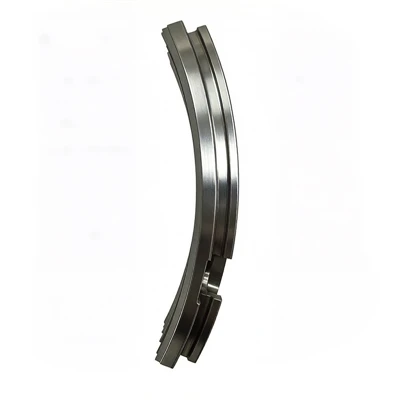
At the end of the day, whether you’re powering a commercial jet full of families heading on vacation or a military jet ready for combat, the seal is a small but critical part of the engine. It doesn’t get the same fanfare as the wings or the engines, but without a good seal, nothing works. As an Aircraft Engine Seal supplier, I’ve seen first-hand how getting the seal right for the customer’s needs makes all the difference. If you’re in the market for engine seals, whether it’s for a commercial fleet, military aircraft, or any other application that demands reliable, high-performance seals, don’t settle for a one-size-fits-all product. We work directly with customers to design, manufacture, and supply custom seals that fit their exact requirements, no matter how unique. Reach out to our team today to discuss your needs and find the right seal for your aircraft.
Turbine Gland Seal References
- Federal Aviation Administration (FAA). (2022). Aircraft Engine Seal Design and Maintenance Standards.
- U.S. Department of Defense. (2021). Military Specification for Aerospace Seals (MIL-S-24236).
- Society of Automotive Engineers (SAE). (2020). Aerospace Materials and Processes for Gas Turbine Seals.
- Rolls-Royce plc. (2019). Civilian Gas Turbine Engine Component Reliability Report.
- Naval Air Systems Command (NAVAIR). (2022). Military Aircraft Engine Seal Operational Performance Guidelines.
Jiangsu Turbine Electric Power Technology Co., Ltd.
As one of the most professional aircraft engine seal manufacturers and suppliers in China, we have world-leading production equipment and strong manufacturing capabilities. Please feel free to buy advanced aircraft engine seal for sale here and get pricelist from our factory. Customized orders are welcome.
Address: Building 8, Huaqi Yungu Xuzhou Lingang Industry Accelerator, Jiawang District, Xuzhou City, Jiangsu Province
E-mail: zjh800@163.com
WebSite: https://www.cnturbine.com/
