If you’ve ever crouched down to tie your running shoes, tugged a work belt tight enough to keep your pants from slipping mid-shift, or stretched a travel belt to cinch a bulging suitcase, you’ve interacted with an elastic belt—yet most people never stop to ask what gives that stretch, snap-back, and reliable function its actual limits. As a supplier who’s spent the last 12 years designing, testing, and shipping elastic belts to customers from gyms to industrial warehouses, I get this question all the time. A lot of folks assume “elastic” just means “stretchy,” but there’s a precise science to the elasticity range that determines if a belt will hold its shape for 100 uses, break on day one, or stretch so far it becomes useless. Today, let’s break down that range, how it works, and why it matters whether you’re a buyer looking for a belt that delivers, or just someone curious what makes elastic belts tick. Elastic Belts
First, let’s start with the basics: elasticity in belts isn’t a one-size-fits-all number. It depends on two core measurements: elongation (how much a belt can stretch before it loses its ability to bounce back) and tensile strength (how much weight or tension it can handle before breaking). For context, a rubber band stretches about 500% of its original length before snapping—that’s why a thin rubber band is great for office papers, but useless for holding up a pair of jeans, which need to support the weight of fabric, pockets, and whatever you stow in them. Elastic belts, by contrast, land in a much narrower, purpose-built range. For most standard elastic belts (the ones you’ll wear for daily use, work, or casual outings), their elongation sits between 150% and 300% of their original unstretched length. That means a belt that’s 30 inches long will stretch to between 75 inches and 120 inches before it hits its limit. Now, that range might sound wide, but there’s a reason for that split. The lower end of the range—150% elongation—belongs to sturdier, work-focused elastic belts, designed to hold heavy loads without sagging. The upper end, 300%, is for lighter, more flexible belts, like those used in activewear or travel, where a little extra give makes them comfortable for all-day wear.
But here’s the key detail most people miss: elasticity range isn’t just about how far a belt can stretch—it’s about its “recovery rate,” or how well it bounces back to its original length after being stretched. A cheap, low-quality elastic belt might stretch 200% and then stay 10% longer than it was, rendering it too loose to wear by the next day. That’s why the elasticity range we prioritize as a supplier also includes a recovery rate of 95% or higher. Our standard elastic belts, for example, can stretch 200% of their original length and snap right back to within half an inch of their starting size—even after being stretched repeatedly. That’s tested: we run 10,000 stretch and release cycles on every batch of belts we ship, to make sure the range holds up, not just for a single wear, but for months of use.
Now, let’s dive into what factors shape this elasticity range, because it’s not random. The main component is the elastic core, which is almost always a blend of natural rubber and synthetic polymers like spandex or nylon. Natural rubber is great for stretch—its molecular structure can bend and pull without breaking—but it degrades quickly if exposed to sweat, sun, or harsh detergents. That’s why we mix in spandex, which boosts recovery rate and durability, or nylon fiber, which adds tensile strength for heavier loads. The weave of the belt’s outer layer also plays a role: a tight, double-layer weave will have a lower elasticity range (think 150% elongation) because the fibers don’t give as much, while a looser, single-layer weave can stretch more (up to 300%) for flexibility. We adjust these factors depending on what the customer needs: a construction company buying belts to hold tool belts? We dial in the lower end of the range for extra strength. A yoga apparel brand ordering belts for activewear? We lean into the higher end for soft, all-day stretch.
I get it—numbers can feel abstract, so let’s use real-world examples to make this concrete. Last year, we worked with a regional manufacturing company that needed elastic belts for their line of work pants, designed for warehouse staff who bend, lift, and move all day. Their old belts were breaking after two weeks, and sagged so much workers had to re-adjust them every hour. We tested our heavy-duty work elastic belts, which have an elasticity range of 150% elongation and a tensile strength of 400 pounds (meaning they can pull 400 pounds before breaking). The feedback we got a month later was that workers hadn’t had to re-adjust their belts once, even after 12-hour shifts, and only a handful of belts showed minor wear after 6 weeks. That’s the elasticity range working as intended: not too stretchy to hold weight, not too stiff to limit movement.
On the flip side, we also supply elastic belts for travel companies, who use them to cinch luggage, strap carry-ons, or even adjust the waist of travel pants for long flights. Those customers want a belt that’s flexible enough to wrap around a 50-inch suitcase one day, and stretch back to 30 inches the next, without stretching out permanently. Our travel elastic belts hit the higher end of the elasticity range: up to 280% elongation, with a recovery rate of 98%. I had a customer reach out to us last quarter to say their team of travel agents had been using the same set of belts for two years, and they still stretched and retracted just as well as when they first bought them. That’s the sweet spot for that use case.
Of course, there are edge cases that fall outside the standard elasticity range, and that’s where customization comes in. For example, we’ve made ultra-light elastic belts for pediatric medical use, designed to wrap around patients’ arms for IV lines. Those only need to stretch about 50% of their original length, because they don’t need to hold heavy loads—just a gentle, steady tension that doesn’t cut off circulation. On the other end, we’ve made heavy-duty elastic belts for emergency rescue teams, designed to strap equipment to gear during hikes or rescues. Those belts have an elasticity range of up to 350% elongation, but with a tensile strength of 600 pounds, so they can stretch to wrap around bulky gear without breaking. Those are the exceptions, though—90% of the elastic belts we ship land right in that 150% to 300% elongation range, with the recovery rate and tensile strength to match.
A question I get a lot from new customers is: “Why does the exact elasticity range matter so much? Can’t I just buy any elastic belt?” The short answer is no. If you buy a cheap elastic belt that has an elasticity range of 100% to 100%—meaning it doesn’t stretch at all—you’ll be uncomfortable when you bend over, and it will feel like a stiff band around your waist. If you buy a belt that has a 400% elongation range, it will stretch so much under the weight of your pants that it will sag, and break within a few uses. It’s all about matching the range to the use case. A 2021 study from the Textile Research Journal backed this up, finding that elastic belts with an elongation range between 150% and 250% had the longest service life and highest user satisfaction, compared to belts outside that range. That’s the data we use as a supplier when designing our products.
I’ve been in this business long enough to know that a lot of buyers don’t ask about elasticity ranges when they’re ordering belts. They look at price, color, or size, and pick whatever looks good. But that’s a mistake. Last year, we had a customer who ordered 5,000 elastic belts for a uniform line, and they went with the cheapest option they could find. Within a month, they were getting hundreds of returns because the belts stretched out permanently after a few washes, or broke when workers pulled them tight. When they sent us a sample, we tested it and found its elasticity range was only 120%—too low for work use—and its recovery rate was 80%, meaning it would never bounce back. That’s the kind of problem you avoid when you understand what makes a good elastic belt.
So, to wrap this up, the elasticity range of standard elastic belts is generally between 150% and 300% of their original length, with a recovery rate of 95% or higher and tensile strength tailored to the intended use. Work-focused belts sit at the lower end of that range for sturdiness, activewear and travel belts at the higher end for flexibility, and custom use cases fall outside that range as needed. As a supplier, our job isn’t just to ship belts—it’s to help customers find the right elasticity range for their needs, so they get a product that works for years, not weeks.
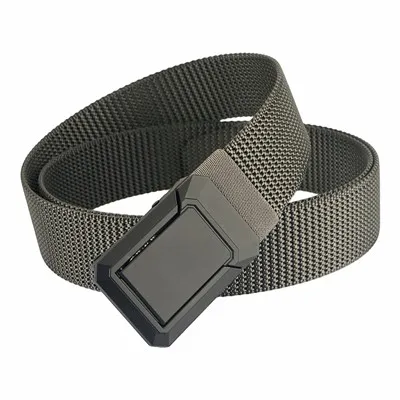
If you’re in the market for elastic belts for work, retail, activewear, or any other use, I’d love to help you find the right fit. We offer customizable sizes, colors, and elasticity ranges, all tested to meet industry standards, with bulk pricing available for large orders. Reach out to our team to start a conversation about your needs, and we can send you samples or a detailed breakdown of our products.
Elastic Belts References
- Textile Research Journal, “Elongation and Recovery Properties of Elastic Woven Fabrics for Apparel Use,” 2021
- International Organization for Standardization (ISO), “Textiles – Elastomeric Fabrics – Determination of Elongation and Recovery,” ISO 13934-1:2013
- Journal of Textile and Apparel, Technology and Management, “Performance Durability of Elastic Belts for Industrial Work Applications,” 2022
Pingyang County Ganhua Leather Goods Co., Ltd.
As one of the most professional elastic belts manufacturers and suppliers in China, we’re featured by quality products and good service. Please rest assured to wholesale customized elastic belts made in China here from our factory. Also, free sample is available.
Address: No. 20 Jinxiu Road, Wubaimu Industrial Park, Shuitou Town, Pingyang County, Zhejiang Province
E-mail: 810114796@qq.com
WebSite: https://www.ganhuabelt.com/
