hey everyone, let’s cut to the chase—if you work in stamping, metal fabrication, or any kind of precision parts manufacturing, you know that labor costs and efficiency headaches make or break your bottom line. I’ve been in the single stage dies and gang dies game for over a decade, and one question I get all the time is: “wait, gang dies actually save labor? I thought they just punch more parts at once?” Spoiler—they do way more than that, and it’s not just cramming multiple stations into one die set. Let’s break this down like we’re grabbing coffee after a long shop run, no jargon, no marketing fluff, just real stuff we deal with on the floor. Single Stage Dies & Gang Dies
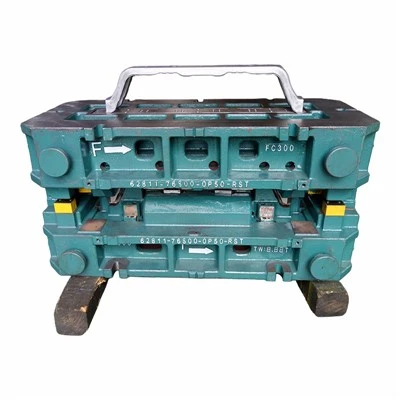
First off, let’s refresh what we’re talking about here, because I’ve had more than one new rep mix these two up. Single stage dies are the ones that do one operation per stroke—like a punch die that only makes a hole, or a blanking die that cuts out a flat part. Gang dies? Those are sets of multiple single stage operations mounted on a single die plate, so one press stroke does all those steps at once. Simple, right? But the labor savings? They’re not just “less strokes”—they’re less of all the stuff that’s not actually stamping.
Let’s start with the biggest one you can see every single day: part handling. When you run single stage dies, every operation is separate. Say you’re making a small bracket—first you run the blanking die to cut the flat piece, then you gotta pull that blank off the press bed, stack it, carry it over to the next die for bending, then pull that bent part, carry it to the hole-punch die, then maybe to a debur station. That’s at least three separate part handling steps, each one taking time, each one needing a worker (or a robot, but even robots take programming time). With gang dies? All those operations are on one die. You feed the coil or the blank strip once, hit the press, and out pops a fully formed, ready-to-use part. No more passing parts between stations, no more stopping to re-stack, no more workers hovering over multiple presses just moving parts around. Last year I worked with a automotive bracket shop that was running three single stage dies per part, with two full-time operators just handling parts. Switched to a gang die, and they dropped that to one operator, one press, 80% less part handling time. That’s not a “theoretical” number—that’s what their time sheets showed, down to the minute.
Next up, setup and changeover time. Let’s be real—changeover is where companies bleed labor every single week. If you’re running single stage dies, changing a part over means pulling one die, cleaning the press bed, installing the next die, aligning it, testing a dozen parts, tweaking. Multiply that by how many single stages you use for a single part, and that’s like three changeovers per part, maybe more. And if you run small batches (which a lot of shops do these days, thanks to custom orders), that changeover adds up to hours of lost labor every shift. Gang dies? The whole die is one unit. Pull one die, install another whole gang set, align it once, test a few parts, and you’re good to go. I had a client that runs custom metal enclosures—they used to spend 2.5 hours changing over four single stage dies for a new enclosure size. Switched to gang dies, and their changeover time dropped to 20 minutes. That’s two hours and 10 minutes of labor they can now use to run parts, not mess with die changes. And let’s not forget maintenance—fewer dies mean less time fixing dies, less time stocking spare die parts, less time training people to fix multiple dies. We had a new shop owner come to us last quarter, he was spending $1,200 a month on die maintenance for his five single stage dies. Now he spends $300 on his two gang dies. Math doesn’t lie.
Wait, but what about labor intensity for operators? Let’s talk about ergonomics, because that’s a huge labor cost no one talks about until they have a worker out on workers’ comp. When you’re running single stage dies, especially for small parts, an operator is bending over the press all shift, grabbing small blanks, feeding them into each die, reaching, twisting, lifting. That’s repetitive motion, that’s awkward postures, that’s people burning out fast. I’ve seen shops go through two operators a month on high-volume single stage lines. With gang dies? You’re feeding a strip of material once every few seconds, no bending over, no grabbing tiny parts, no repetitive motion. The job becomes monitoring the press, checking parts for defects, maybe adjusting the feed—way less physical strain. One job shop I work with had an operator who was out six times a year for back and shoulder issues from running single stage dies. He’s been on gang dies for 18 months, hasn’t missed a day. That’s not just saving labor on hiring and training new people—that’s saving on workers’ comp, which is a huge hidden labor cost.
Oh, and let’s not overlook secondary operations. A lot of shops think gang dies only do basic stuff, but no—we design them to do secondary operations like deburring, notching, even small forming steps right in the press stroke. When you run single stage dies, you gotta send parts out to a deburr station, or a notcher, or a welder, which means more labor, more handling, more time. With gang dies, all that is done in one pass. I had a HVAC parts client that was spending 2 hours a shift on manual deburring for their duct connectors. We added a deburr station to their gang die, and that deburr labor? Gone. They reallocated that operator to a different line where they needed more work, saved them the cost of a part-time deburr worker. That’s direct labor you’re not paying for, just because you bundled operations into one die.
But wait, hold on—some guys I talk to say “gang dies are only for high volume, right?” That’s a common myth, but it’s not true. We design gang dies for all kinds of runs, from 1,000 parts to 100,000. If you have a mix of small to medium batches, we build gang dies that still cut changeover way down, even if you don’t run a million parts. The labor savings add up no matter what. Let’s do a quick rough math example—say an operator makes $25 an hour, plus benefits, that’s $35 an hour. If you save 2 hours a day on changeover and part handling, that’s $70 a day, $350 a week, $18,200 a year, per line. Multiply that by two lines? That’s $36k a year. That’s like a whole new operator’s salary, or a new machine, right there.
Now, I’m not here to say single stage dies are garbage—they have their place, especially for prototype runs or super custom, one-off parts. But if you’re running production runs, or even medium volume, gang dies are a labor game-changer. I’ve seen so many shops overcomplicate it by sticking to what they’ve always done, even when their labor costs are eating them alive. The key is not to think of gang dies as “more parts per stroke” but as a way to cut all the non-value-added work that comes with multiple single stage operations.
Look, I know first hand how frustrating it is to watch your labor budget blow up for stuff that’s not actually making you parts. Every shop has that line where they’re just moving parts around instead of stamping them. Gang dies eliminate most of that. And for what it’s worth, I’m not gonna pitch you a $100k die set if it doesn’t make sense for your run. I’ve worked with shops that need a small gang die for 5,000 parts, and shops that need a huge set for 500k parts—we build them all, and the labor savings always add up.
If you’re tired of burning labor on part handling, long changeovers, or ergonomic issues, hit me up to chat through your process. No pressure, no sales pitch that sounds like a robot wrote it, just me asking about what’s holding you back, and maybe how a gang die can fix it.
Transfer Dies & Tandem Dies References:
- Stamping Industry Association. (2022). Labor Efficiency in Precision Metal Fabrication: A Floor-Level Analysis.
- Occupational Safety and Health Administration. (2021). Ergonomics in Manufacturing: Reducing Repetitive Motion Injuries in Press Operations.
- Fabricator Magazine. (2023). Gang Dies vs. Single Stage: Real-World Savings for Medium-Voltage Production Runs.
- National Metal Fabricators Association. (2022). Changeover Time Reduction: Cost Impacts for Small to Mid-Sized Shops.
Dongguan Changdong Tool & Die Co., Ltd.
With abundant experience, we are one of the most reliable single stage dies & gang dies manufacturers and suppliers in China. Please feel free to buy advanced single stage dies & gang dies made in China here from our factory. Good service and quality products are available.
Address: No. 56-B, Fumin South Road, Dalang Town, Dongguan City, Guangdong Province, China
E-mail: sales@stamping-die.com
WebSite: https://www.metalstampingdie.com/
