Hey there! As a supplier of Earth Resistance Testers, I often get asked about the differences between various types of these testers. So, I thought I’d take a moment to break it down for you. Earth Resistance Tester
First off, let’s talk about the basic function of an Earth Resistance Tester. Its main job is to measure the resistance of an earth electrode or grounding system. This is super important because a proper grounding system is crucial for electrical safety. It helps prevent electrical shocks, protects equipment from damage, and ensures the proper functioning of electrical systems.
Now, let’s dive into the different types of Earth Resistance Testers and their differences.
1. Fall – of – Potential Testers
These are probably the most commonly used Earth Resistance Testers. The fall – of – potential method works by injecting a known current into the earth electrode and then measuring the voltage drop between the electrode and a reference point.
The way it works is pretty straightforward. You have three electrodes: the earth electrode you’re testing, a current electrode, and a potential electrode. The current electrode is placed at a certain distance from the earth electrode, and the potential electrode is placed between them. The tester sends a current through the current electrode, and then measures the voltage at the potential electrode. By using Ohm’s law (V = IR), it can calculate the resistance of the earth electrode.
One of the big advantages of fall – of – potential testers is their accuracy. They can provide very precise measurements, especially when the test conditions are right. However, they can be a bit time – consuming to set up. You need to carefully position the electrodes, and sometimes it can be difficult to find a suitable location for the current and potential electrodes, especially in areas with limited space or complex soil conditions.
2. Clamp – on Testers
Clamp – on Earth Resistance Testers are a bit different. Instead of using the fall – of – potential method, they use a clamp to measure the current and resistance in a grounding conductor.
The biggest advantage of clamp – on testers is their convenience. You don’t need to disconnect the grounding conductor or drive additional electrodes into the ground. You simply clamp the tester around the conductor, and it can quickly give you a measurement of the resistance. This makes them great for on – the – spot testing, especially in situations where you need to test multiple grounding points quickly.
However, clamp – on testers do have some limitations. They are mainly used for measuring the resistance of parallel grounding systems. If you’re testing a single grounding electrode, the results may not be as accurate. Also, they can be affected by nearby electrical currents, which can sometimes lead to inaccurate readings.
3. Stakeless Testers
Stakeless Earth Resistance Testers are a relatively new type of tester. They combine some of the features of fall – of – potential and clamp – on testers.
These testers work by using two clamps. One clamp injects a current into the grounding system, and the other clamp measures the resulting voltage. This allows them to measure the resistance without the need for additional electrodes to be driven into the ground.
Stakeless testers are very convenient, similar to clamp – on testers. They can be used in areas where it’s difficult to drive electrodes, such as in paved areas or areas with rocky soil. However, like clamp – on testers, they may not be as accurate as fall – of – potential testers in some situations, especially when testing single grounding electrodes.
4. Digital vs. Analog Testers
Another difference you’ll find among Earth Resistance Testers is whether they are digital or analog.
Digital testers are becoming more and more popular these days. They offer several advantages. First of all, they are easier to read. The results are displayed on a digital screen, so there’s no need to interpret a needle on a scale. They also tend to be more accurate, as they use advanced electronic circuits to measure the resistance. Digital testers often come with additional features, such as data logging, which allows you to store and analyze the test results later.
Analog testers, on the other hand, have been around for a long time. They are simple and reliable. Some people prefer them because they are more intuitive to use. You can see the movement of the needle on the scale, which gives you a visual indication of the resistance. However, they may not be as accurate as digital testers, especially when measuring very low or very high resistances.
5. Portable vs. Benchtop Testers
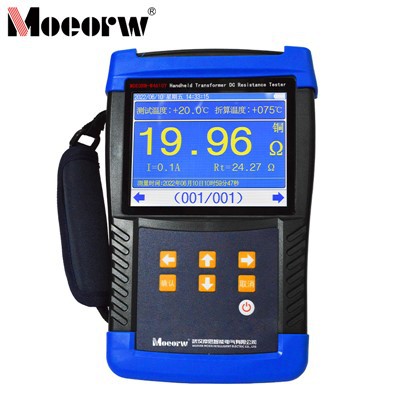
Portable Earth Resistance Testers are designed for field use. They are small, lightweight, and easy to carry around. They are great for electricians, technicians, and engineers who need to test grounding systems on – site. Portable testers usually have a battery power source, so you can use them in areas where there’s no access to electricity.
Benchtop testers, on the other hand, are larger and more powerful. They are typically used in laboratories or workshops where more accurate and detailed testing is required. Benchtop testers often have more advanced features and can provide more precise measurements. However, they are not very portable, and you need to have access to a power outlet to use them.
So, when choosing an Earth Resistance Tester, you need to consider your specific needs. If you need to test grounding systems on – site quickly and conveniently, a clamp – on or stakeless tester might be a good choice. If you need very accurate measurements, a fall – of – potential tester, especially a digital one, could be the way to go. And if you’re doing more in – depth testing in a laboratory or workshop, a benchtop tester might be the best option.
As a supplier of Earth Resistance Testers, I can offer you a wide range of options to meet your needs. Whether you’re looking for a portable tester for field work or a benchtop tester for detailed laboratory testing, we’ve got you covered. If you’re interested in learning more about our products or have any questions about which tester is right for you, don’t hesitate to get in touch. We’re here to help you make the best choice for your electrical safety needs.
References:
- Electrical Safety Standards and Guidelines
- Technical Manuals of Earth Resistance Testers
Electric Safety Tools Test Equipment So, if you’re in the market for an Earth Resistance Tester, feel free to reach out. We can discuss your requirements and find the perfect tester for you.
Wuhan Moen Intelligent Electric Co., Ltd.
As one of the most professional earth resistance tester manufacturers in China, we’re featured by quality products and good price. Please rest assured to buy high quality earth resistance tester in stock here and get quotation from our factory. Customized orders are welcome.
Address: Building A, No.1, Fenghuangyuan 2nd Road, Donghu New Technology Development Zone, Wuhan, Hubei, China
E-mail: info@hvhipotsystem.com
WebSite: https://www.hvhipotsystem.com/
